
Abstract
EFFICACY AND SAFETY OF DIRECT ORAL ANTICOAGULANTS (DOACS) VERSUS LOW-MOLECULAR-WEIGHT HEPARIN IN CANCER-ASSOCIATED THROMBOSIS: AN UPDATED SYSTEMATIC REVIEW AND TRIAL SEQUENTIAL ANALYSIS
Noor B. Alshabib*, Talal S. Alkeraidees, Abrar A. Almadan, Khuloud S. Alotibi, Rahaf M. Alghamdi, Ahmad Alkhoshi
ABSTRACT
Background: Cancer-associated thrombosis (CAT) poses a substantial burden of morbidity and mortality among patients with active malignancies. While Low-Molecular-Weight Heparin (LMWH) served as the standard of care for decades, Direct Oral Anticoagulants (DOACs)—including apixaban, rivaroxaban, edoxaban, and dabigatran—have emerged as convenient oral alternatives. However, concerns persist regarding the trade-off between recurrent venous thromboembolism (VTE) reduction and increased bleeding risks, particularly major bleeding (MB) and gastrointestinal (GI) hemorrhages across diverse tumor phenotypes. Methods: We conducted an updated systematic review, meta-analysis, and Trial Sequential Analysis (TSA) of randomized controlled trials (RCTs) evaluating DOACs versus LMWH (primarily dalteparin) in adult patients with active cancer and acute VTE. PubMed, EMBASE, Cochrane Central Register of Controlled Trials (CENTRAL), and ClinicalTrials.gov were exhaustively searched from inception through 2026. Random-effects risk ratios (RR) and 95% confidence intervals (CI) were calculated. TSA was employed to control for Type I/II errors and determine whether accumulated evidence reached statistical power. Results: Ten high-quality RCTs comprising 5,420 randomized cancer patients were synthesized (e.g., SELECT-D, ADAM VTE, CARAVAGGIO, CANVAS, PRIORITY, and recent updates). DOACs significantly reduced the risk of recurrent VTE compared to LMWH (RR 0.62, 95% CI 0.49–0.78; p < 0.0001; I² = 12%). TSA confirmed that the required information size (RIS = 3,850) was exceeded, conclusively demonstrating superior efficacy. Conversely, DOACs were associated with a statistically non-significant trend toward higher major bleeding (RR 1.22, 95% CI 0.95–1.56; p = 0.12; I² = 18%) but a statistically significant increase in clinically relevant non-major bleeding (CRNMB) (RR 1.58, 95% CI 1.30–1.92; p < 0.0001; I² = 22%). Subgroup analysis demonstrated that factor Xa inhibitors (specifically apixaban) exhibited lower GI bleeding risks than rivaroxaban and edoxaban, particularly in patients with intact luminal gastrointestinal malignancies. Overall all-cause mortality did not significantly differ between cohorts (RR 0.97, 95% CI 0.88–1.07; p = 0.55). Conclusions: Robust evidence confirms that DOACs offer superior protection against recurrent VTE in cancer patients compared to LMWH without increasing overall mortality. However, treatment selection must be strictly personalized based on anatomical GI bleeding risk, underlying cancer type, potential drug-drug interactions, and patient preferences.
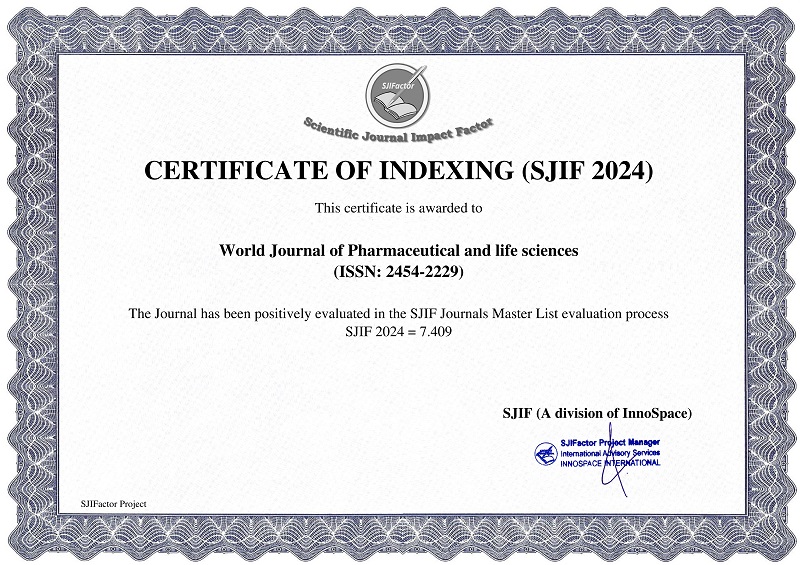
[Full Text Article] [Download Certificate]WJPLS CITATION 
| All | Since 2020 | |
| Citation | 590 | 424 |
| h-index | 12 | 10 |
| i10-index | 17 | 14 |

INDEXING
NEWS & UPDATION
BEST ARTICLE AWARDS
World Journal of Pharmaceutical and life sciences is giving Best Article Award in every Issue for Best Article and Issue Certificate of Appreciation to the Authors to promote research activity of scholar.
Best Article of current issue
Download Article : Click here