
Abstract
THYROXINE HORMONE IS AMINO ACID HAVING SINGLE CHIRAL CENTER
*Dr. Pruthviraj K. Chaudhary, Dr. Dhiren L. Chaudhari, Jay M. Patel, Krutik P. Patel, Het P. Patel, Dr. Dhrubo Jyoti Sen, Jaspal A. Chaudhary and Dr. Manoj P. Gadhvi
ABSTRACT
Thyroid hormones are essential chemicals produced by the butterfly-shaped thyroid gland in your neck. They regulate the body's metabolism, growth, energy levels, and internal temperature. The two primary hormones are: Thyroxine (T4): The main inactive form circulating in the blood. The body converts T4 into T3 as needed. Triiodothyronine (T3): The highly active form that directly impacts your organs, especially your heart, muscles, and brain. How the Process Works: Production: The thyroid gland requires dietary iodine to synthesize both T3 and T4. Regulation: The brain controls this process. The hypothalamus releases TRH, which triggers the pituitary gland to release TSH (Thyroid-Stimulating Hormone). TSH then directs the thyroid to produce T3 and T4. Hypothyroidism (Underactive Thyroid): The thyroid doesn't produce enough hormones. This causes systems to slow down, leading to fatigue, weight gain, constipation, and cold intolerance. Hyperthyroidism (Overactive Thyroid): The thyroid produces too much hormone. This accelerates metabolism, causing weight loss, heat intolerance, anxiety, and rapid heart rate.
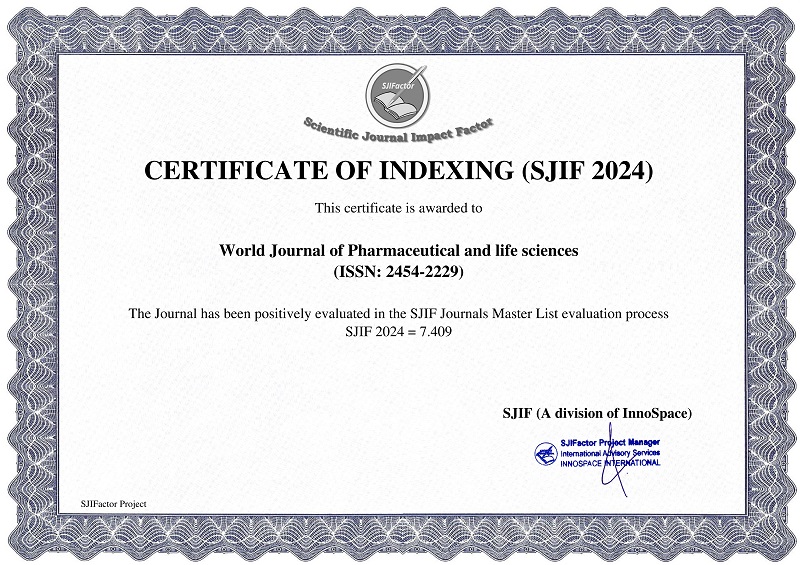
[Full Text Article] [Download Certificate]WJPLS CITATION 
| All | Since 2020 | |
| Citation | 590 | 424 |
| h-index | 12 | 10 |
| i10-index | 17 | 14 |

INDEXING
NEWS & UPDATION
BEST ARTICLE AWARDS
World Journal of Pharmaceutical and life sciences is giving Best Article Award in every Issue for Best Article and Issue Certificate of Appreciation to the Authors to promote research activity of scholar.
Best Article of current issue
Download Article : Click here