

Abstract
BURDEN OF POLYPHARMACY AND DRUG–DRUG INTERACTIONS IN HAEMODIALYSIS PATIENTS WITH CHRONIC KIDNEY DISEASE: IMPLICATIONS FOR MEDICATION SAFETY AND CLINICAL PHARMACY PRACTICE
N. Sai Neha Sri*, S. K. Nishma, V. Sarika, Dinesh Goud, Rajani G.
ABSTRACT
Background: Chronic kidney disease (CKD) patients undergoing haemodialysis are exposed to complex pharmacotherapy due to multiple comorbidities, resulting in a high prevalence of polypharmacy. This significantly increases the risk of drug–drug interactions (DDIs), adverse drug reactions (ADRs), and medication-related complications, posing major challenges to medication safety. Objective: This review aims to evaluate the burden of polypharmacy and drug–drug interactions in haemodialysis patients with CKD and to examine their implications for medication safety and clinical pharmacy practice. Methods: A systematic-style literature review was conducted using PubMed, Scopus, and Web of Science databases. Relevant studies published in the last decade were identified using predefined keywords related to CKD, haemodialysis, polypharmacy, and DDIs. Study selection followed PRISMA guidelines, and data were synthesized qualitatively, focusing on prevalence, mechanisms, clinical outcomes, and pharmacy interventions. Results: The review identified a high prevalence of polypharmacy, affecting approximately 60–90% of haemodialysis patients, with an average of 8–12 medications per patient. DDIs were reported in 50–85% of cases, with a significant proportion classified as moderate to severe. Pharmacokinetic alterations, including reduced renal clearance, altered protein binding, and dialysis-related drug removal, contribute substantially to interaction risk. High-risk drug classes include cardiovascular agents, antidiabetics, antibiotics, and anticoagulants. DDIs were associated with increased ADRs, hospitalization, and mortality. Evidence suggests that clinical pharmacy interventions, including medication therapy management, reconciliation, and interaction screening, significantly improve medication safety and therapeutic outcomes. Conclusion: Polypharmacy and DDIs are highly prevalent and clinically significant in haemodialysis patients with CKD. Integrating clinical pharmacists into multidisciplinary care, along with structured medication review and pharmacovigilance systems, is essential to reduce medication-related harm and improve patient outcomes.
[Full Text Article] [Download Certificate]WJPLS CITATION 
| All | Since 2020 | |
| Citation | 590 | 424 |
| h-index | 12 | 10 |
| i10-index | 17 | 14 |

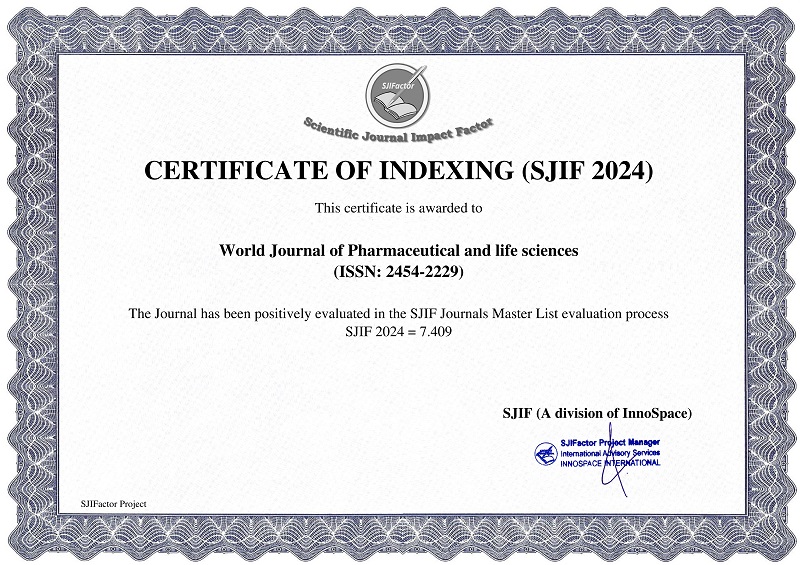
INDEXING
NEWS & UPDATION
BEST ARTICLE AWARDS
World Journal of Pharmaceutical and life sciences is giving Best Article Award in every Issue for Best Article and Issue Certificate of Appreciation to the Authors to promote research activity of scholar.
Best Article of current issue
Download Article : Click here